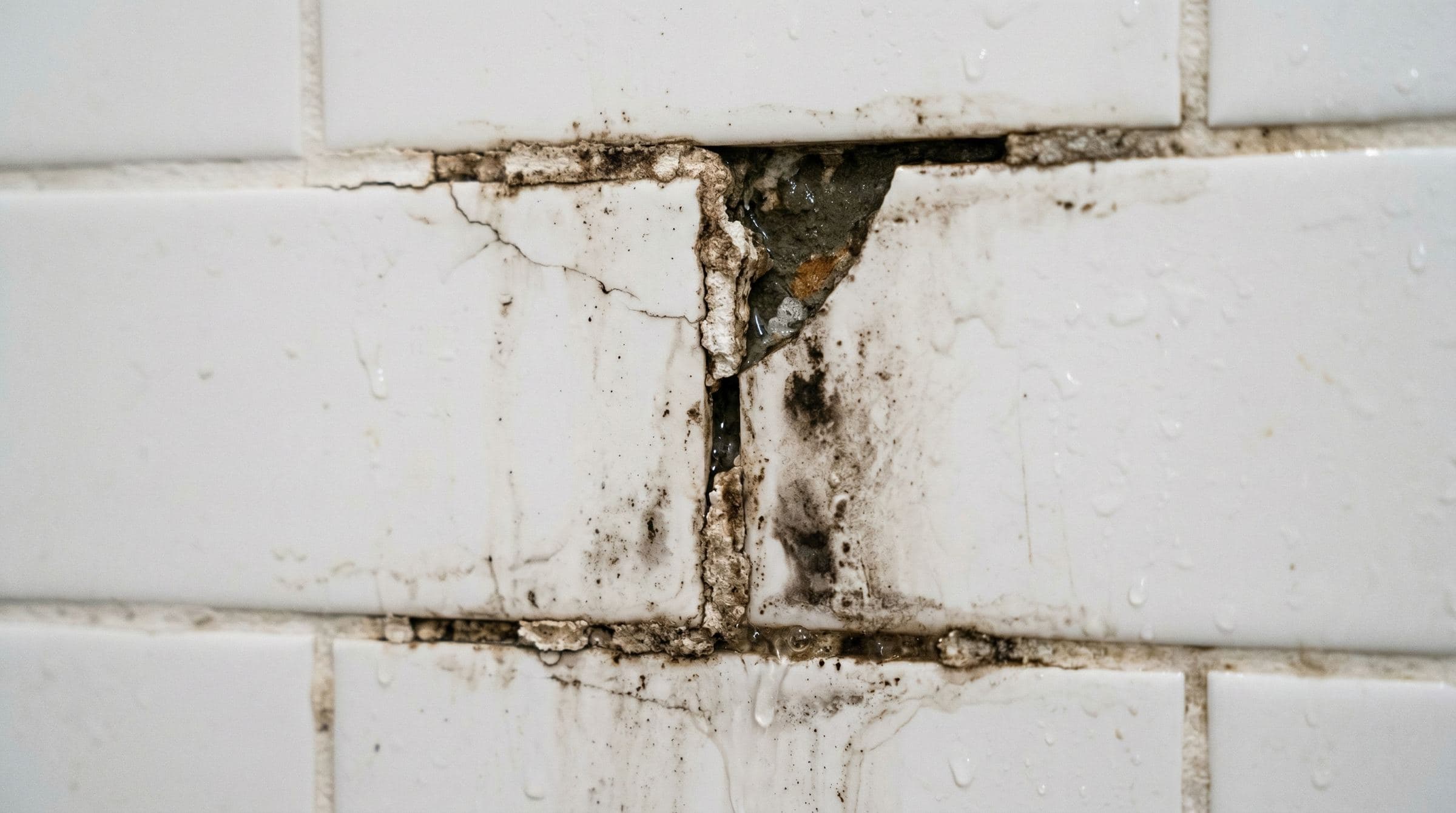
If your shower tile is cracking, popping off, or you're seeing discoloration along the grout lines, you don't have a tile problem. You have a waterproofing problem. Nine times out of ten, that's the root cause — and it usually means the original installation cut corners on the substrate.
The Most Common Cause
Water gets behind the tile. It saturates the backer board or — worse — the drywall behind it. The substrate swells, shifts, and the tile loses its bond. You see cracks in the grout first. Then tiles start to sound hollow when you tap them. Eventually, they come loose.
This happens because the waterproofing membrane was either skipped entirely, applied incorrectly, or a cheap product was used in a wet area that demanded something better.
Signs You Have a Problem
Cracked grout lines that keep coming back after you re-grout. Tiles that sound hollow when you tap them. Discoloration or dark spots that appear when the shower is wet and don't fully dry. Musty smell in the bathroom. Any of these mean moisture is getting where it shouldn't be.
Can You Patch It?
Sometimes, if it's caught early and limited to a small area. We can remove the affected tiles, assess the substrate, apply a proper membrane, and re-tile the section. But if the damage has spread — if the backer board is soft or there's mold behind the wall — you're looking at a tear-out and rebuild.
How to Prevent It
Proper waterproofing at installation. We use Schluter Kerdi, Laticrete Hydro Ban, or RedGard depending on the application. The membrane goes on the substrate before any tile. Every seam, every corner, every penetration gets sealed. It adds time and cost to the installation, but it's the difference between a shower that lasts 5 years and one that lasts 25.
If you're getting quotes for a shower build and the contractor doesn't mention waterproofing, that's a red flag. Ask specifically what system they use. If the answer is vague, keep looking. Want to know how long a properly built shower should last versus one that cuts corners? We break that down in how long does a tile shower last. And if repeated cracking has you wondering whether the rebuild should even be tile at all versus an acrylic surround, our tile shower vs acrylic surround Shore-2026 breakdown walks through when each one is honestly the right call. When you do rebuild, the grout you choose matters as much as the membrane behind it, which is why we walk through epoxy vs cement grout for a shower and why epoxy is almost always the right call at the Shore.